

Glory Attaochu, a singer and songwriter also known as Duwa on social media, always had a zest for life and a natural affinity toward people. She always found great joy in helping others, uplifting their spirits, and being able to empathize with them. This attitude naturally compelled Glory to not just sit by and watch the events in Ukraine unfold, especially after witnessing the unfortunate events occurring to “people who looked like [her]” there.

Glory and her guitar
Just before the last week of February in 2022, Glory heard rumors of Russia possibly invading Ukraine, and like many of us, she did not think Russia would follow with real military action. Her initial thoughts were: “it’s not going to happen, Russia is not going to invade Ukraine [and] there [won’t] be a war.” But, on the first day of the invasion, her social media blew up with many posts, conversations, and comments discussing the unfolding events. Later, on the second day of the war, Glory told us she had come across many dismaying pictures and stories about the deeply disturbing events unfolding before her eyes. Even worse, she learned about the racial disparity transpiring, as there were numerous reports of African students and families experiencing discrimination. This included being denied transportation and being held at the border while others were allowed to pass through. She revealed her reaction to us, thinking: “Wait, is this real? Oh my god, [it is, and] many of my people who look like me are struggling to leave Ukraine.”
Without delay, her next immediate thought was of how she could help these people leave Ukraine despite all the challenges and biases against them. Knowing that collective action would prove to be more fruitful than any individual action, Glory reached out to a good friend leading a 60,000-member Afrocentric community on Clubhouse (a social audio networking application) and asked them: “Are you seeing what’s happening with Black people [in] the Ukrainian war? Can we talk about it in your clubhouse and make people more aware?” The two would then make discussion rooms for the community members to share their thoughts, reactions, and the situations of African students and families.
After receiving requests to come and talk about the war on Twitter Space, Glory obliged and happened to go viral within the first 24 hours of launching the space, making the hashtag “#africansinukraine” a trending topic on Twitter. As her platform gained exposure, numerous people would contact Glory asking how they could help or for advice to leave Ukraine quickly and safely. This enthusiastic response, coupled with Glory’s realization that people needed information coming from the space, inspired her to make a call center dedicated to helping black people escape the conflict. As a natural speaker and people person, Glory told us that she did what she does best: talk. After the success of the first, spaces were being run daily, and the call center would eventually blossom into BlackForeignorsUkraine (BFU), a registered nonprofit organization founded by Glory to make her team’s efforts official.
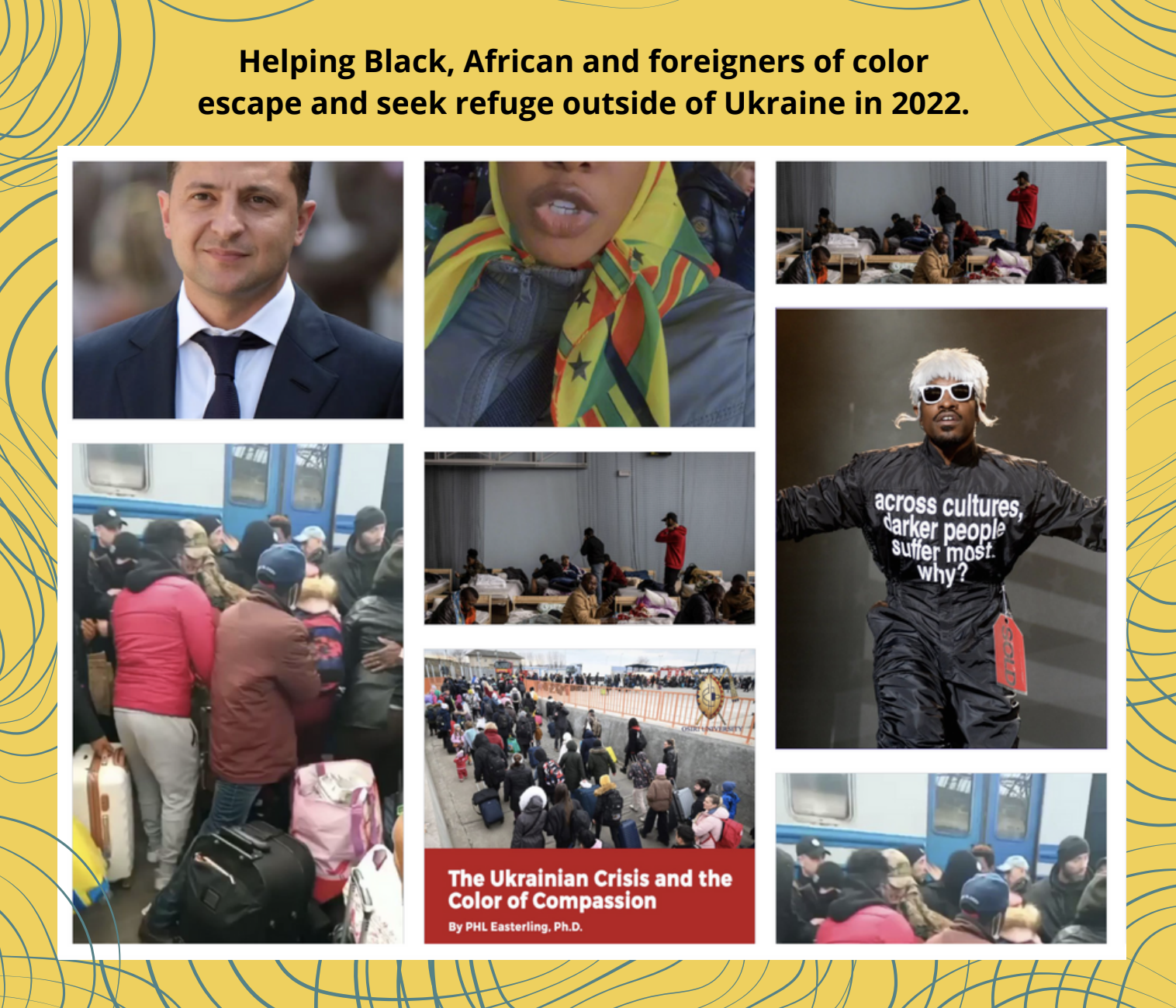
Her most urgent priority during the first five days of the war was getting people out by translating and interpreting maps to help them navigate through the country. Many of these trapped or lost black people were international students from African countries such as Nigeria, Ghana, or Cameroon. With many of their parents on a different continent altogether, they or their loved ones would commonly reach out to BFU in search of each other. In those first five days, BFU amazingly managed to get upwards of 700 people out of Ukraine. Common challenges met by those trying to leave were either heading to country borders that would give them the hardest time getting out or being considered a low priority on transportation systems. The BFU team would say something along the lines of: “go to this train, the other train isn’t letting black people on.”
After helping a considerable amount of people flee the country, BFU began to plan their next step, which was to provide money for temporary housing, food, official documents needed to cross the border, and transportation. Many of those who couldn’t leave didn’t have the money to pay for such documents or train/bus tickets. Fortunately, many people who encountered Glory’s Twitter Space wanted to pitch in and donate. These monetary funds went directly into the hands of those who verified and requested aid. The BFU team gave hundreds of students cash after verifying that they were real and actually needed the money. Sending donations wouldn’t come without its problems though, as needless people were trying to request cash while the people who genuinely needed cash were taken advantage of. BFU had to problem-solve situations like these through smarter planning and improved verification methods.
Despite how upbeat this process may seem, BFU encountered some extremely stressful circumstances. One particular incident was extremely impressed into Glory’s memory: the incident involving an African family stuck in the city of Mykolaiv Oblast, which was at some point, the heart of the war and about to be bombed. With no possible way out, the family tried to contact people for help and was eventually connected with BFU. The only option for BFU to get them out was recruiting a local who had to drive through Russian-occupied areas since the city was already overrun. It was a high-risk plan and the driver had demanded $5000 to get the job done. To realistically cover the expense, BFU partnered up with another organization and paid together. Glory told us that the entire scenario was so unimaginably dangerous and terrifying. Just moments after getting on the highway, the city was bombed! Houses in the family’s neighborhood were not spared either, showing how if BFU had hesitated or waited even a little longer, nobody would have known the fate of the family.
Glory’s work in founding and leading BFU to do great things is undoubtedly a massive achievement, but the work could not have been done and could not have been successful without teamwork and perseverance. Glory saw many sleepless nights to ensure that her work went on, sometimes going for days without rest. Her family initially did not know what she was up to, and were rightly concerned with her being on her computer all the time. When they learned of her selfless and inspiring work, Glory’s family did all that they could to support her and her mission. For example, they made sure she was always comfortable and well-nourished. Her brother brought her many drinks, including self-made smoothies! Also, Glory expressed to us her gratitude toward the BFU team, which consisted of amazing people who, despite being strangers, all banded together for a greater cause. Since just about anyone could join the organization at first, there were troublesome individuals in the beginning stages. It was tough to work with people joining for the wrong reasons. Glory states: “there [were] some irrational people, […we] learned the importance of interviewing before anything.” Time proved to be an effective filter of undedicated people as well, with the original team of over a few dozen sifted into a determined, diligent seven. Each of these members would play stellar roles, with many giving crucial directions, information, and money to hundreds in need. Glory would love to give a massive shout-out and virtual hug to anyone who has contributed to BFU in any way, especially to those who’ve stuck with her on the whole journey!
Glory has and still is accomplishing much with her organization, BFU. As a first-timer in stepping up for the greater good herself, she has some insightful advice for our readers. The biggest point she wants to emphasize is “if you are called to it […] don’t hesitate, don’t waste time.” If you feel like you can’t accomplish much by yourself, remember that “there are so many people that want to help and they do it [each] in their way.” Sometimes lives depend on whether you act or not, clearly demonstrated by BFU helping the family escape from Mykolaiv moments before the bombing. Many people donate or try to raise funds; others offer up their skills to build things like a compelling website; and still others go out to do physical work. There are so many ways in which one could help. So, from Glory and all of us at Humanitarian Voices from Ukraine: If you feel connected or called to a problem, never wait, act on it!